


Inkfuse DTF Transfers: Complete Guide for 2026

Table of Contents
- What Makes Inkfuse DTF Transfers Different
- Inkfuse DTF Transfer Types: A Quick Comparison
- UV DTF vs Standard DTF: Which Suits Your Project?
- Cost Per Print: How Inkfuse DTF Pricing Works
- Wholesale DTF Gang Sheets: Scaling Production Without Waste
- DTF Printing Training Courses: What to Learn Before You Buy
- Common Mistakes and Troubleshooting for Inkfuse DTF Transfers
- Frequently Asked Questions
Last Updated: September 23, 2026
What Makes Inkfuse DTF Transfers Different
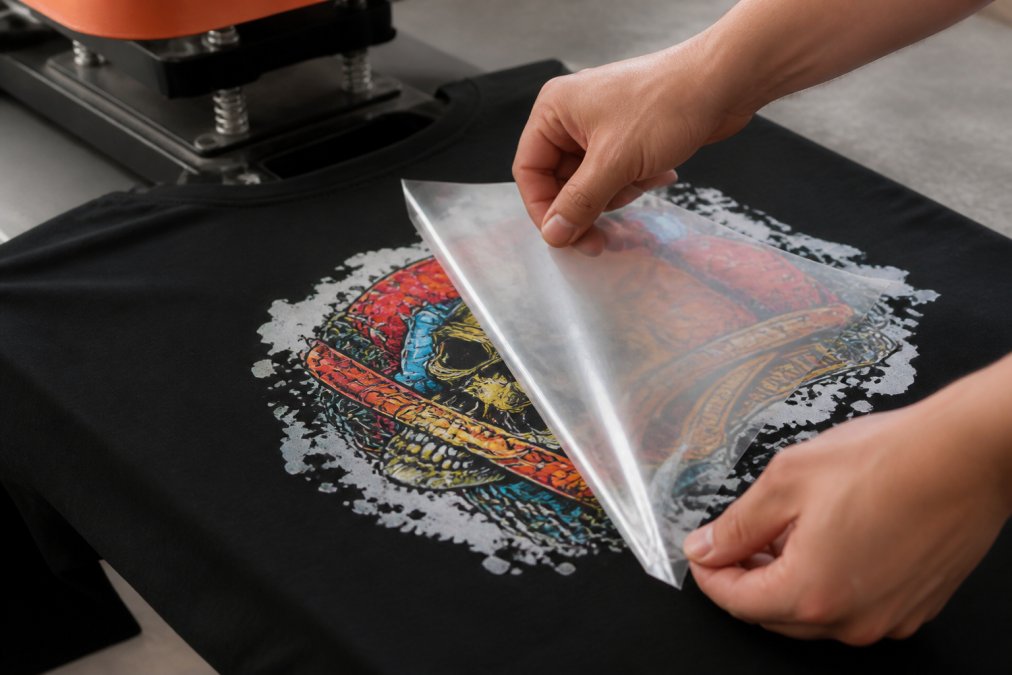
Inkfuse DTF transfers print full-colour designs onto special film, coat them with hot melt powder, and heat-press them onto fabric. This guide from BB5wholesale covers how the process works, what it costs, and where it goes wrong.
The appeal is simple: no weeding, no pre-treatment, no colour limits. Print, powder, cure, press.
Most suppliers sell you film and leave you to work out the rest. A good Inkfuse DTF setup includes the support around it: gang sheet builders that cut waste, and clear press settings. Get those right and the process is reliable; get them wrong and you will reprint orders at your own cost.
Inkfuse DTF Transfer Types: A Quick Comparison
Most jobs fall into one of two workflows: standard DTF for fabric and UV DTF for rigid surfaces. They use different films, adhesives, and press settings, so treat them as separate processes. Within each, real technical differences change how a transfer behaves.
Standard DTF Transfers
Standard DTF transfers bond to fabric through a hot melt powder adhesive layer. Print your design in CMYK plus a white underbase onto transfer film, apply powder while the ink is wet, shake off the excess, then cure the sheet. The white layer makes the print opaque on dark garments, without it, colours go muddy on anything darker than mid-grey.
Two variables drive quality more than anything else:
- Powder grade. Fine-grade hot melt powder gives a softer hand feel and better detail on small text. Coarse powder is more forgiving to apply but adds bulk and can feel plasticky on lightweight cotton.
- Cure completeness. Under-cured powder looks fine on the sheet but fails in the wash. A properly cured sheet is dry to the touch, does not feel tacky, and does not smudge when you run a finger across it.
UV DTF Decals
UV DTF decals are printed and cured with ultraviolet light, then laminated to a carrier film. No powder stage, no heat press: position the decal, press firmly, peel the carrier away.
Side-by-Side Comparison
| Feature | Standard DTF | UV DTF |
|---|---|---|
| Bonds to | Fabric and textiles | Glass, metal, plastic, ceramic |
| Powder stage | Required | Not required |
| Heat press | Required | Not required |
| Stretch | High | None |
| Wash durability | Good when pressed correctly | Not designed for laundering |
| Hand feel | Soft to slightly raised | Glossy, rigid |
| Best for | Apparel, uniforms, merch | Hard surface branding |
A Third Option Worth Knowing: DTF on Leather and Suede
Neither standard nor UV DTF is ideal for leather and suede, because heat and moisture can mark the surface. For a logo on a leather patch or suede cap, press a standard DTF transfer at lower temperature for a longer dwell, with a protective sheet between platen and material. Niche, but common enough in workwear and heritage-brand jobs to test on scrap before quoting.
Choosing Between Them
The deciding question is what you are decorating. Fabric goes to standard DTF; anything rigid goes to UV DTF. There is very little overlap, and trying to force one into the other's role is where most wasted material comes from.
UV DTF vs Standard DTF: Which Suits Your Project?
The deciding question is what you are decorating. Fabric goes to standard DTF; anything rigid goes to UV DTF. There is very little overlap, and trying to force one into the other's role is where most wasted material comes from.
Cost Per Print: How Inkfuse DTF Pricing Works
Cost per print comes down to three things: transfer size, how much of the sheet you use, and whether you buy single transfers or build a gang sheet. The more useful question is what a finished, applied print costs once film, powder, ink, and reprints are accounted for.
The Two Buying Routes
Single transfers are priced by size. At BB5wholesale, DTF transfers by size start at £2.95, from pocket logos and left chest prints to oversized full front and back designs. You order only the size you need, keeping small jobs affordable.
What Drives the Cost Per Print
When you print in-house, the per-print cost is not the film alone. It is the sum of:
- Film. Priced per sheet, so the more of the sheet you fill, the lower the film cost per design.
- Ink. White ink is the expensive channel because it lays down the heaviest deposit. Designs with large white areas cost more to produce than designs that sit on light garments.
- Powder. Applied by weight. Over-powdering wastes material and adds hand feel; under-powdering causes wash failures.
- Curing energy. Ovens and heat sources draw power, and a full sheet cures at roughly the same energy cost as a half-empty one, another reason to fill the sheet.
- Reprints. The hidden cost most people miss. A transfer that peels after two washes costs you the transfer, the garment, and the customer.
ROI: Small Shops vs High-Volume Shops
The maths works differently depending on your volume.
Low volume, varied sizes. Buy transfers by size: no sheet space you cannot fill, no equipment cost. For a one-person operation selling custom garments online, this is the lowest-risk route until monthly volume justifies a printer.
A Practical Way to Think About It
- Low volume, varied sizes: buy transfers by size, avoiding sheet space you cannot fill.
- Repeat designs, consistent sizes: build a gang sheet and nest artwork efficiently to lower cost per unit.
- Mixed orders: group by size before you build, same-size logos waste far less film than mismatched shapes.
Spending a little more on quality film and powder is cheaper than absorbing returns. The real cost-per-print calculation is not the cheapest transfer, but the one that survives the wash.
Wholesale DTF Gang Sheets: Scaling Production Without Waste
BB5wholesale's gang sheet builder is built for exactly this. Upload your designs, place them, and order.
DTF Printing Training Courses: What to Learn Before You Buy
DTF printing training courses are worth taking before buying equipment, because most beginner problems are process problems, not hardware problems. A course will not make you a printer, but it stops you destroying film while you learn.
What a useful course should cover:
- Press settings: temperature, pressure, and dwell time for different fabrics
- Powder application: how much hot melt powder to use and how to shake off the excess evenly
- Curing: what a properly cured sheet looks and feels like, and how to tell under-cured film
- Peel technique: hot peel versus cold peel, and why the wrong choice ruins fine detail
- Print head maintenance: the daily and weekly routine that keeps inkjet technology reliable
- Troubleshooting: dull colour, patchy adhesion, cracking, and film curl
Common Mistakes and Troubleshooting for Inkfuse DTF Transfers
| Problem | Likely cause | Fix |
|---|---|---|
| Peeling after washing | Under-pressed or under-cured | Increase pressure and dwell time; re-press the finished garment |
| Cracking at the edges | Cooled too fast or wrong peel temperature | Follow the correct peel method; let the transfer cool evenly |
| Dull or faded colour | Under-cured powder or low press temperature | Check curing and raise press temperature within the film's range |
| Patchy adhesion | Moisture in the fabric | Pre-press the garment to remove moisture before applying |
| Film curling on the sheet | Storage humidity | Store film sealed and flat, away from damp |
Frequently Asked Questions
What makes Inkfuse DTF transfers stand out?
Inkfuse DTF transfers use high-resolution, full-colour printing on a soft, stretchable film that bonds to cotton, polyester, blends, canvas and denim. Unlike many budget transfers, they resist cracking and fading after repeated washing. They are ready to press with no weeding or pre-treatment, which saves time for small custom apparel businesses. For UV DTF decals, the same detail holds on hard surfaces like glass, metal and plastic, making them suitable for branded merchandise beyond garments.
Are Inkfuse DTF products suitable for small-scale custom apparel businesses?
Yes. Inkfuse DTF transfers work well for low-volume runs because you can order by size or build a gang sheet that fits multiple designs on one sheet. That means a small shop can offer varied products without committing to large minimums. The transfers apply with a standard heat press at 150-160°C for 10-15 seconds, so no specialist equipment is needed. This makes them practical for Etsy sellers and start-up print shops that need professional results without high overheads.
How does Inkfuse DTF compare to other UK-based transfer suppliers?
Inkfuse DTF focuses on consistent colour vibrancy and wash durability, which are common weak points in cheaper transfers. The range covers standard DTF for garments and UV DTF for hard surfaces, giving one supplier for multiple decoration needs. Pricing is transparent: DTF transfers by size start at £2.95, and you can build a gang sheet from £8.00. Unlike some suppliers, there are no hidden fees, and the gang sheet builder helps you maximise every sheet to reduce waste.
What equipment is required to use Inkfuse DTF transfers effectively?
You need a heat press capable of reaching 150-160°C and applying consistent pressure, plus a garment or hard substrate. For standard DTF, pre-press the item for 5 seconds, press the transfer for 10-15 seconds, let it cool, peel, then re-press for 5 seconds. No weeding tools or pre-treatment liquids are required. If you plan to produce transfers in-house from scratch, you would also need a DTF printer, inks, film and hot melt powder, but buying ready-to-press transfers removes that equipment cost.