


Best Quality DTF Transfers 2026: UK Guide

Table of Contents
- What Makes Quality DTF Transfers Stand Out
- Top UK DTF Transfer Suppliers Compared
- DTF Transfer Washing Instructions and Care
- Best Fabric for DTF Transfers
- Custom DTF Transfers UK: Turnaround and Scalability
- Troubleshooting Common DTF Transfer Failures
- Which DTF Transfer Supplier Should You Choose?
- Conclusion
Last Updated: August 6, 2026
What Makes Quality DTF Transfers Stand Out
Direct-to-film (DTF) transfers have transformed custom apparel production by combining precise ink adhesion with film integrity. Quality transfers depend on three variables: the film's coating consistency, the ink's adhesion properties, and the powder application process. Get these right, and your transfers maintain their appearance through regular washing.
Durability and Wash-Test Performance
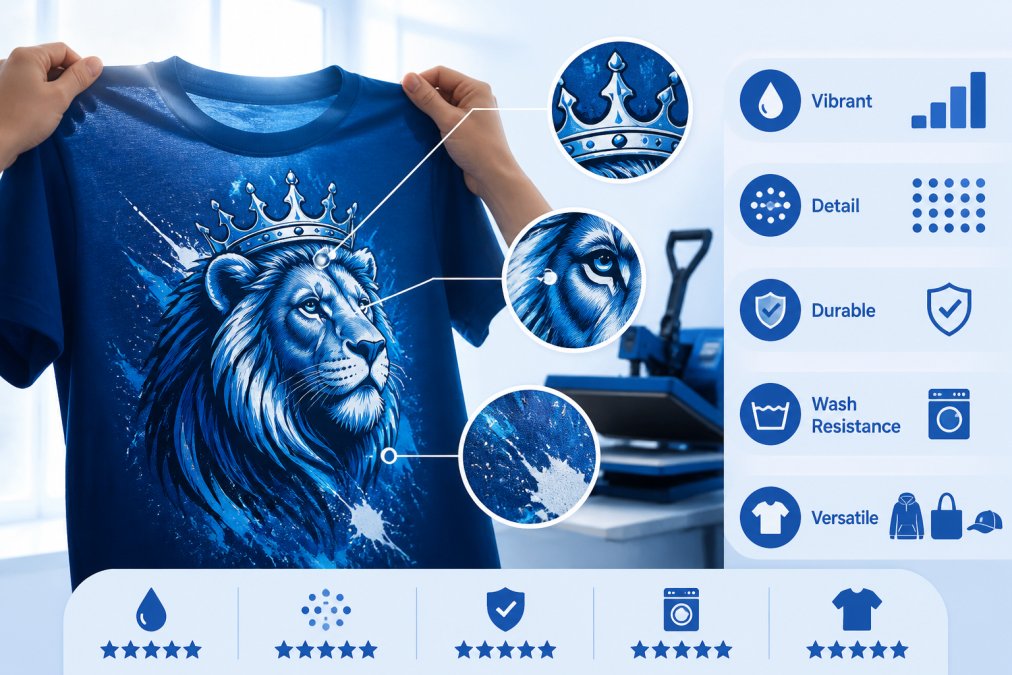
A quality transfer should survive at least 30 washes without significant cracking, peeling, or colour loss. This benchmark separates professional suppliers from amateur operations. Durability depends on how well the adhesive powder bonds with both the ink and the garment during heat-press curing.
When transfers fail early, it's usually because the powder didn't cure properly or the film has poor ink hold. Professional suppliers run wash tests to verify performance; if they won't share expected durability, that's a red flag. Temperature and dwell time matter enormously. Most cotton garments need 160-180°C for 10-15 seconds. Polyester requires slightly lower temperatures (150-160°C) to avoid fabric damage.
Colour Vibrancy and Opacity Standards
Vibrant colours come from the ink formulation and the white ink layer underneath. Without a solid white base, colours on dark garments look washed out. Quality suppliers use CMYK colour profiles calibrated to their specific equipment and maintain consistent opacity standards, the measure of how completely ink covers the fabric beneath it.
Poor opacity shows the garment colour bleeding through, ruining the design. Fine detail work, small text, and photographic images require excellent opacity and precise colour registration.
Artwork Resolution and File Preparation
Vector files (AI, EPS, PDF) are ideal because they scale without quality loss. Raster files (JPG, PNG) need to be at least 300 DPI at your intended print size. Artwork should be in CMYK mode, not RGB, because DTF printing uses CMYK inks. Transparency must be flagged upfront; simpler designs with solid backgrounds are more forgiving.
Top UK DTF Transfer Suppliers Compared
The UK market has several established DTF transfer suppliers, each with distinct strengths.
BB5wholesale: Gang Sheet Builder and 24/7 Support
BB5wholesale leads with a gang sheet builder that lets you arrange multiple designs on a single sheet, reducing waste and per-unit costs. Their 24/7 customer support is genuine, not automated. BB5wholesale offers fast door-to-door delivery.
RoyalDTF: Next-Day Delivery and No Minimums
RoyalDTF competes on speed and flexibility with next-day delivery across the UK and no minimum order requirements. Their transfers are known for vibrant colours and durability, particularly in fine detail work and photographic images. Pricing requires contact, which allows for volume discount negotiation. RoyalDTF custom DTF gang sheets start from €6 per metre at bulk and €9.90/m at the entry tier, with no minimum order.
DTF Printing Kings: Same-Day Dispatch and UK Specialists
DTF Printing Kings has been in the DTF space since 2020, making them one of the early UK specialists. Same-day dispatch (for orders before noon) is their core offer. They operate a gang sheet builder and are UK-based with UK manufacturing, appealing to businesses wanting local suppliers and reduced shipping times.
DTF Transfer UK: Original Trade Supplier with Price Match
DTF Transfer UK offers a price match guarantee, suggesting confidence in competing on cost without sacrificing quality. They handle everything from simple one-colour transfers to full-colour photographic prints on cotton, polyester, softshell, and blends. They also offer UV DTF for hard surfaces (mugs, phone cases), useful if you're expanding beyond apparel.
DTFX: Fine Detail and Photographic Quality
DTFX specialises in detailed work. If you're printing fine lines, small text, or photographic artwork, their quality reputation is solid. They handle multiple fabric types with no minimum orders, keeping them accessible for small operations.
Inkfuse: 20+ Years of Print Industry Expertise
Inkfuse brings over 20 years of print industry experience. They're not just a DTF supplier; they also sell DTF printers, inks, films, and consumables. This vertical integration means they understand the entire process, valuable if you're considering buying your own DTF printer.
| Supplier | Next-Day Available | No Minimums | Distinctive Feature | Best For |
|---|---|---|---|---|
| BB5wholesale | Yes | Yes | Gang sheet builder, 24/7 support | Small businesses, Etsy sellers, efficiency-focused teams |
| RoyalDTF | Yes | Yes | Vibrant colours, high-resolution detail | Rush orders, photographic prints |
| DTF Printing Kings | Yes (before noon) | Yes | UK manufacturing, early specialist | UK-based businesses, same-day needs |
| DTF Transfer UK | Yes (before noon) | Yes | Price match guarantee, UV DTF option | Cost-conscious buyers, hard-surface decoration |
| DTFX | Standard | Yes | Fine detail, photographic quality | Complex artwork, premium designs |
| Inkfuse | Standard | Yes | Equipment and consumables, 20+ years experience | Scaling businesses, future in-house printing |
DTF Transfer Washing Instructions and Care
How you apply and care for a DTF transfer determines whether it lasts 10 washes or 50. Most failures happen because of incorrect heat press settings or improper first washing.
Application Temperature and Dwell Time
Cotton garments typically need 160-180°C with 10-15 seconds dwell time. Polyester requires lower heat (150-160°C) because the fabric degrades at higher temperatures. Blends fall somewhere in between, usually around 155-170°C.
Dwell time is the duration the heat press stays down. Too short, and the powder doesn't cure fully, leading to weak adhesion. Too long, and you risk scorching the garment. Pressure matters too, most heat presses operate at 3-4 bar. Always check the pressing instructions that come with your transfers.
Peel Method and Curing Process
Most DTF transfers use a hot peel method: you peel the film backing immediately after pressing while the transfer is still warm. Pull at a shallow angle (around 45 degrees) rather than straight up, which reduces stress on the transfer edges.
After peeling, the transfer needs time to fully cure before washing. Most suppliers recommend waiting 24 hours.
First Wash and Long-Term Durability
The first wash is critical. Use cold water and a gentle cycle. Avoid bleach, fabric softener, and high heat in the dryer. Turn the garment inside out before washing to reduce abrasion on the transfer surface. A quality DTF transfer should survive 30+ washes without significant degradation.
Best Fabric for DTF Transfers
Not all fabrics accept DTF transfers equally. Understanding fabric properties helps you choose the right garments and set appropriate expectations.
Cotton and Cotton-Rich Blends
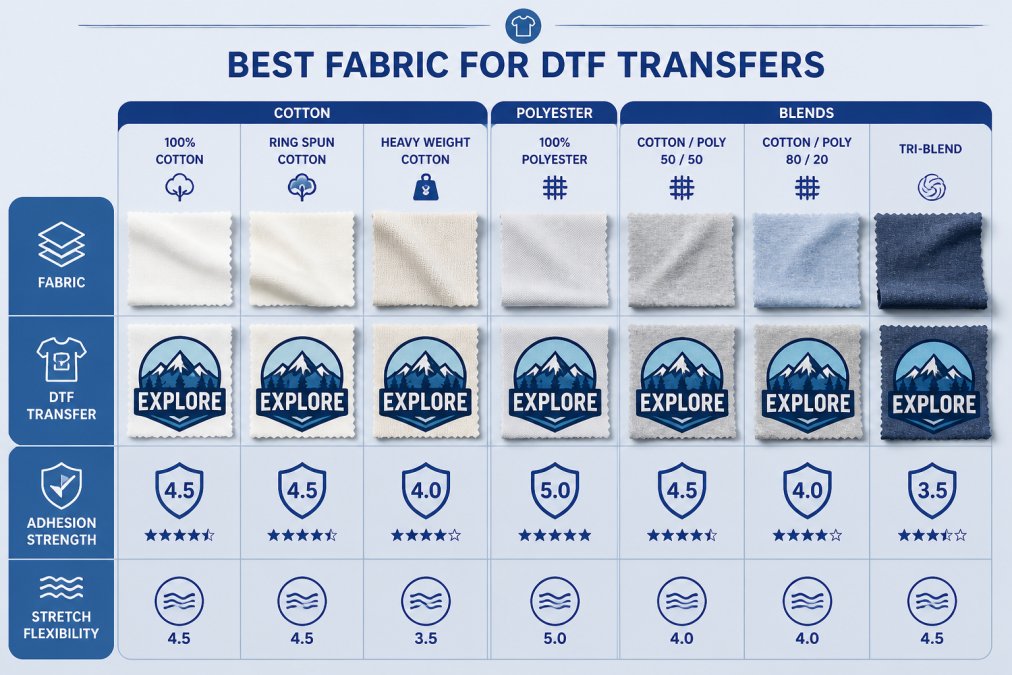
Cotton is the most forgiving fabric for DTF transfers. The natural fibres absorb the adhesive powder evenly, creating strong bonds. Cotton-rich blends (80% cotton, 20% polyester) work well too. Mid-range quality garments work better than ultra-budget blanks due to more consistent finishes.
Polyester and Performance Fabrics
Polyester is trickier than cotton because the smooth fibre surface doesn't absorb adhesive as readily. Lower heat press temperatures (150-160°C) are essential to avoid damaging the fabric. Performance fabrics (moisture-wicking polyester) are even more challenging due to their special finishes. Testing is essential before committing to bulk orders.
Stretchability and Soft Hand Feel
Stretchable fabrics (spandex blends, elastane) require careful handling. A 5-10% spandex blend is usually fine. Above 15% spandex, you're risking transfer failure with standard DTF. Soft hand feel separates premium DTF from budget options, coming down to film thickness and adhesive formulation.
Custom DTF Transfers UK: Turnaround and Scalability
Speed and scalability are where DTF transfers shine compared to traditional embroidery or screen printing.
Turnaround Time and Shipping Speed
Most UK DTF suppliers offer next-day delivery for orders placed before noon. Some offer same-day dispatch. Turnaround time is how long it takes to produce your order after submission; shipping is how long delivery takes. For small businesses running Etsy shops, next-day delivery is usually sufficient. For event organisers needing bulk orders, same-day dispatch can be the difference between meeting a deadline and disappointing customers.
Scalability for Small Businesses and Bulk Ordering
DTF transfers scale elegantly. A supplier can produce 1 transfer or 1,000 without significant cost differences. No-minimum policies are valuable for small businesses. Gang sheet production reduces per-unit costs significantly. For small Etsy sellers running 10-15 orders monthly, no-minimum suppliers with fast turnaround are ideal because you're producing to order, minimising waste and storage costs.
Wholesale Pricing and Volume Discounts
Most suppliers offer volume discounts, but they're not always transparent. Common structures offer discounts at 50-unit, 100-unit, and 500-unit thresholds. Always ask for a quote if you're planning regular orders above 100 units.
Troubleshooting Common DTF Transfer Failures
Even with quality transfers and correct application, things occasionally go wrong.
Peeling and Adhesion Issues
Peeling during or shortly after pressing usually means insufficient heat or dwell time. The fix: increase temperature by 5-10°C and add 2-3 seconds dwell time. Test on a scrap garment first. Peeling after a few washes suggests the same problem manifesting later. Edge peeling often indicates pressure issues. Check your heat press for level platen and consistent pressure.
Colour Accuracy and Print Quality Problems
Colour shifts between your artwork and the printed transfer usually come from incorrect colour profiles. Always supply CMYK artwork, not RGB. Dull colours often indicate poor white ink coverage. Pixelation or blurry fine detail suggests low-resolution artwork. DTF requires 300 DPI at your intended print size.
Which DTF Transfer Supplier Should You Choose?
The right supplier depends on your specific needs.
Choose BB5wholesale if: You're running a small business with 10-50 orders monthly and value efficiency and support. The gang sheet builder saves time, and 24/7 support handles edge cases.
Choose RoyalDTF if: You need next-day delivery consistently and want vibrant colours for detailed artwork.
Choose DTF Printing Kings if: You want same-day dispatch and prefer UK manufacturing.
Choose DTF Transfer UK if: Cost is your primary concern and you want price matching.
Choose DTFX if: Your designs are complex, photographic, or feature fine text and detailed artwork.
Choose Inkfuse if: You're considering scaling to in-house DTF printing.
Choosing quality DTF transfers means evaluating durability, colour standards, and supplier reliability. The suppliers covered here represent the strongest options in the UK market, each with distinct strengths. Your choice depends on your order volume, design complexity, and timeline. Test with a small order before committing to a supplier. A few transfers now tell you more about quality and service than any marketing claim. British Standards Institution guidance on textiles and printing provides standards for print durability. For detailed pressing instructions and fabric compatibility, consult Textile Exchange sustainability standards or contact your chosen supplier directly. BB5wholesale's gang sheet builder and 24/7 support make them the strongest choice for most small businesses.
Frequently Asked Questions
How do I know if a DTF transfer will last through multiple washes?
Quality DTF transfers should withstand 30+ washes without significant fading or peeling when applied correctly. Look for suppliers who test their transfers against durability standards and provide wash-test data. Proper application, correct heat press temperature (typically 160-170°C), adequate dwell time (10-15 seconds), and correct peel method, is critical. Always follow the supplier's specific pressing instructions and cure the transfer fully before the first wash. BB5wholesale and other reputable UK suppliers provide detailed application guidance to ensure longevity.
What's the difference between DTF transfer washing instructions from different suppliers?
Washing instructions vary slightly based on the specific transfer film and adhesive powder used. Most quality suppliers recommend turning garments inside out, using cold water on the first wash, avoiding bleach, and air-drying rather than machine-drying. The curing process matters most, transfers must be fully cured (typically 24 hours) before washing. Some suppliers provide detailed care sheets; others post instructions online. Always check your supplier's specific DTF transfer washing instructions before processing customer orders, as adhesive formulations differ and incorrect washing can compromise durability.
Which fabric works best with DTF transfers?
Cotton and cotton-rich blends (80% cotton or higher) are ideal for DTF transfers, offering excellent ink adhesion and soft hand feel. Polyester works well too, though it requires slightly lower pressing temperatures to avoid damage. Blended fabrics (cotton-polyester mixes) provide versatility and good results. Avoid heavily textured or loose-weave fabrics, which can cause ink pooling. The best fabric for DTF transfers depends on your end product, t-shirts favour cotton for comfort, while performance wear benefits from polyester's durability. Always test on your chosen fabric before committing to bulk orders.
Why should I choose a UK-based DTF transfer supplier over international options?
UK-based suppliers offer faster turnaround times (often next-day or same-day dispatch), lower shipping costs, and easier communication across time zones. Custom DTF transfers UK providers understand local fabric preferences and can advise on UK-specific regulations for apparel labelling and safety. You avoid international customs delays and higher postage fees. Many UK suppliers like BB5wholesale offer 24/7 support, secure payment methods, and reliable door-to-door delivery. For small businesses and Etsy sellers, local sourcing reduces lead times and makes it easier to manage inventory and customer deadlines.
What file format and resolution do I need for quality DTF transfers?
Vector files (AI, EPS, PDF) are ideal for logos and graphic designs, ensuring crisp edges at any size. Raster files (PNG, JPEG) should be at least 300 DPI for print quality. CMYK colour profile produces the most accurate colour on transfers; RGB files may not print as expected. Artwork resolution matters, low-resolution files (under 150 DPI) result in blurry or pixelated transfers. Most suppliers, including BB5wholesale, accept standard file formats and provide gang sheet builders that handle file preparation for you. Always check your supplier's file requirements before uploading.
This article was written using GrandRanker