


Best DTF Transfer Printing Services: 2026 Guide

Table of Contents
- What is DTF Transfer Printing?
- How to Prepare Gang Sheets for DTF Printing
- Understanding DTF Transfer Pricing and Hidden Fees
- Custom DTF Transfer Turnaround Times Explained
- Key Factors When Choosing DTF Transfer Printing Services
- DTF vs. Screen Printing vs. Heat Transfer Vinyl
- Troubleshooting Common DTF Application Issues
- Conclusion
Last Updated: August 29, 2026
What is DTF Transfer Printing?
Direct-to-film (DTF) transfer printing is a digital textile printing method that transfers designs directly onto apparel using a specialized heat press and adhesive powder. The process involves printing your design onto a special transfer film, applying a curing powder, and then heat-pressing the transfer onto fabric. Unlike screen printing, which requires separate screens for each colour, DTF printing handles full-colour designs in a single pass.
The appeal is straightforward: no minimum order quantities, no lengthy setup times, and no weeding or pretreatment required. You upload your artwork, the printer produces the transfer, and you apply it with a standard heat press. This makes DTF transfer printing services ideal for small businesses, Etsy sellers, and print shops managing variable order volumes.
What sets modern DTF printing apart is gang sheet technology. Instead of printing individual transfers one at a time, you can arrange multiple designs on a single sheet, maximizing material usage and cutting costs significantly. This is where the real efficiency gains happen for businesses running custom apparel operations at any scale.
How to Prepare Gang Sheets for DTF Printing
Gang sheet preparation is where most creators either unlock efficiency or waste time and material. A gang sheet is simply one large piece of transfer film containing multiple designs arranged strategically to minimize waste. The better your layout, the lower your per-unit cost.
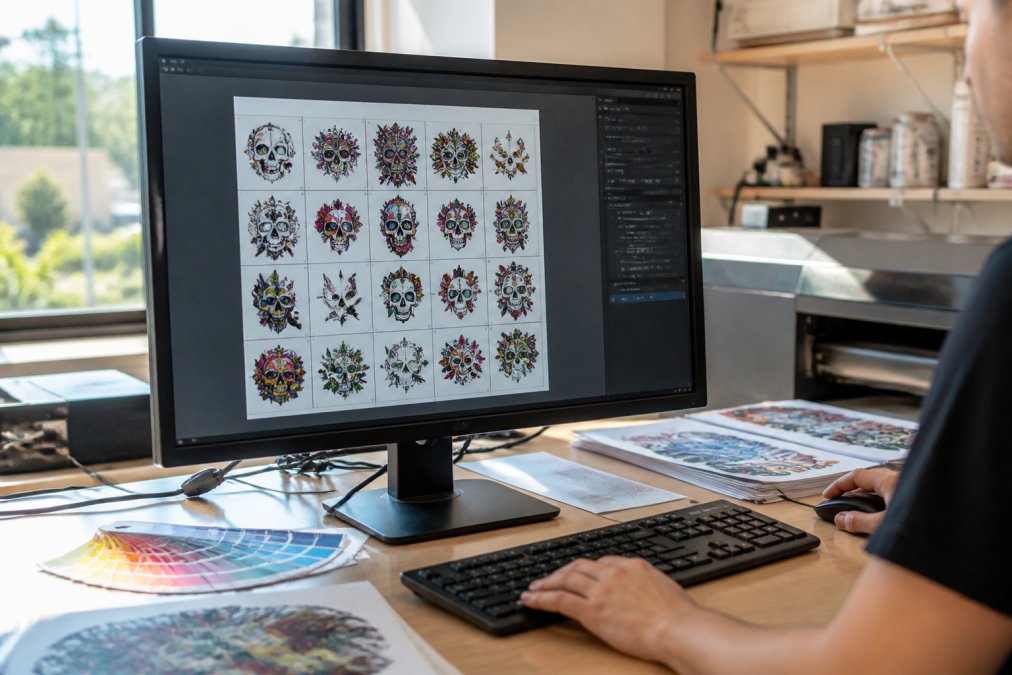
Start by exporting your designs in the correct format. You'll want high-resolution PNG or PDF files with transparent backgrounds, ideally in CMYK colour space to match what the printer will output. Vector graphics work best because they scale without quality loss, but raster images at 300 DPI will also produce sharp results. Many DTF services, including BB5wholesale, provide a gang sheet builder tool that handles much of this work for you, letting you upload designs and arrange them visually without manual calculations.
When arranging designs on your gang sheet, leave adequate spacing between each design. Most DTF printers require at least 5-10mm clearance between designs to account for cutting tolerances. Group similar-sized designs together to minimize waste, but don't obsess over perfect efficiency on your first attempt, you'll learn the optimal layout patterns quickly.
File naming matters more than most people realize. Use clear, descriptive names like "Customer_Name_Design_v1" rather than "Design1" or "Final_FINAL_v3". When orders go wrong, you'll need to identify which design caused the issue, and a proper naming system saves hours of frustration.
Before uploading to your DTF service, verify colour accuracy. Print a small test batch if you're working with a new provider. Colours can shift between your screen and the final transfer, so seeing a physical sample prevents costly mistakes on large orders.
Understanding DTF Transfer Pricing and Hidden Fees
DTF transfer pricing looks straightforward until you dig into what's actually included. Most services charge per transfer by size, but the real cost structure involves several variables that catch people off guard.
Base pricing typically starts around £2.95 per transfer for standard sizes, as with BB5wholesale's DTF Transfers By Size option. However, this is just the transfer cost. Additional charges often include setup fees, rush processing, and shipping. Some providers bundle these into the per-unit price; others itemize them separately, making true cost comparison difficult.
Gang sheet printing changes the equation. Instead of paying per individual transfer, you pay for the entire sheet. A gang sheet might cost £8.00, but if you fit 12 designs on it, your per-design cost drops to around 67p. This is where volume efficiency becomes tangible. The more designs you pack onto a sheet, the lower your unit cost, which is why understanding gang sheet optimization directly impacts your bottom line.
Hidden fees emerge in several places. Rush orders typically cost 25-50% more (bls.gov). Custom sizing beyond standard dimensions may incur upcharges. Colour matching requests sometimes carry additional charges. The safest approach is to ask your provider upfront: what's included in the quoted price, and what costs extra? Reputable services like BB5wholesale are transparent about this because hidden fees destroy customer relationships.
Shipping costs vary dramatically by location and order size. Some providers offer free shipping above certain order values; others charge flat rates. Calculate total delivered cost, not just the per-transfer price, when comparing services. A slightly higher per-unit price with free shipping often beats lower pricing with expensive shipping added at checkout.
Custom DTF Transfer Turnaround Times Explained
Turnaround time is where DTF printing's flexibility really shines compared to traditional methods. Most standard orders process within 3-5 business days from order confirmation to dispatch. This assumes your files are print-ready and you haven't requested any custom modifications.
The actual timeline breaks down like this: file review (1 day), printing (1 day), curing and quality check (1 day), packing and dispatch (1 day). If everything runs smoothly, you're looking at 3-4 working days. Some providers offer same-day dispatch for orders placed before a specific cutoff time, typically around 2 PM.
Rush processing accelerates this timeline. Paying for rush service can get your order printed and dispatched within 24 hours of order confirmation. This costs more, typically 25-50% extra, but it's invaluable when a client deadline is tight or you've miscalculated demand. BB5wholesale's 24/7 customer support means you can arrange rush orders even outside standard business hours.
Shipping time sits separately from production time. Once your transfers dispatch, delivery typically takes 2-5 working days depending on your location and the shipping method selected. Some providers offer next-day delivery options for premium prices. Always confirm the dispatch date, not just the order date, when calculating when you'll actually receive your transfers.
Seasonal peaks affect turnaround. During peak trading periods like September (back-to-school) and November-December (festive season), even standard orders may take longer. Booking ahead during these periods is wise. Conversely, off-peak seasons offer faster service and sometimes discounted pricing.
Key Factors When Choosing DTF Transfer Printing Services
Selecting the right DTF service depends on matching their strengths to your specific needs. No single provider excels at everything, so prioritizing what matters most to your business is essential.
Print quality and colour accuracy rank first for most users. Look for providers who can demonstrate consistent results across different fabric types. Request samples before committing to large orders. Colour vibrancy and wash durability are non-negotiable, transfers that fade or peel after a few washes destroy your reputation and customer satisfaction.
Minimum order quantities significantly impact small businesses and Etsy sellers. Some providers require minimum orders of 10-25 units per design. Others, like BB5wholesale, have no minimum order requirements, letting you test designs or fulfil single-unit custom orders profitably.
The gang sheet builder tool quality matters more than most realize. A clunky, unintuitive interface costs you time every single order. A well-designed tool like BB5wholesale's gang sheet builder lets you upload designs, arrange them visually, and preview the layout before committing. This saves hours monthly and reduces errors.
Customer support responsiveness is crucial when problems occur. A transfer arrives damaged, or colours don't match expectations, you need fast resolution. BB5wholesale's 24/7 support availability means you're never stuck waiting for business hours to reopen. Real people answering at 2 AM matter when your order is due tomorrow.
Payment security and method variety reduce friction. Multiple secure payment options, credit cards, PayPal, bank transfers, and others, make transactions smoother. BB5wholesale offers more than 10 secure payment methods, which matters when international customers or business accounts need specific payment options.
Shipping reliability and speed affect your ability to meet client deadlines. Fast, predictable door-to-door delivery is non-negotiable. Tracking transparency lets you inform customers exactly when their orders arrive. Some providers ship same day; others take several days. Faster isn't always better if it costs significantly more, but reliability always matters.
DTF vs. Screen Printing vs. Heat Transfer Vinyl
Understanding how DTF stacks against competing technologies helps you choose the right method for each project. Each has genuine strengths and legitimate limitations.
Screen printing remains the gold standard for high-volume orders. Once you've created the screens, per-unit costs drop dramatically, often cheaper than DTF for orders of 100+ units. The trade-off is setup time and cost. Creating screens for a 5-unit order makes no financial sense. Screen printing also handles only solid colours or simple separations efficiently; complex, full-colour designs require expensive multi-screen setups. DTF printing beats screen printing for small quantities, complex artwork, and variable designs.
Heat transfer vinyl (HTV) appeals to crafters and small operations because the barrier to entry is low. A basic heat press and vinyl cutter cost less than DTF equipment. However, HTV has real limitations. Weeding (removing excess vinyl) is tedious and time-consuming. Durability is shorter than DTF transfers, HTV typically lasts 50-100 washes before peeling noticeably (peer-reviewed research). Colour options are limited to whatever vinyl colours manufacturers produce. DTF printing offers superior wash durability, unlimited colours, and no weeding required.
DTF printing sits in the sweet spot for custom apparel businesses. No minimum orders, full-colour capability, excellent wash durability, and straightforward application. The main limitation is that DTF requires purchasing transfers from a service provider rather than owning the production equipment. This trade-off makes sense for most small and medium businesses because the capital investment in DTF equipment is substantial, while outsourcing to a reliable service like BB5wholesale keeps costs proportional to volume.
Fabric compatibility varies slightly between methods. Screen printing works on nearly any fabric. HTV works best on cotton and cotton blends; polyester can be problematic because vinyl doesn't adhere well to synthetic fibres. DTF transfers adhere to cotton, cotton blends, polyester, and even nylon, making them the most versatile option for mixed fabric orders. This flexibility is particularly valuable when clients request apparel in multiple fabric types.
Troubleshooting Common DTF Application Issues
Most DTF application problems stem from three causes: improper heat press settings, incorrect transfer positioning, or fabric preparation issues. Understanding how to diagnose and fix these problems prevents wasted transfers and frustrated customers.
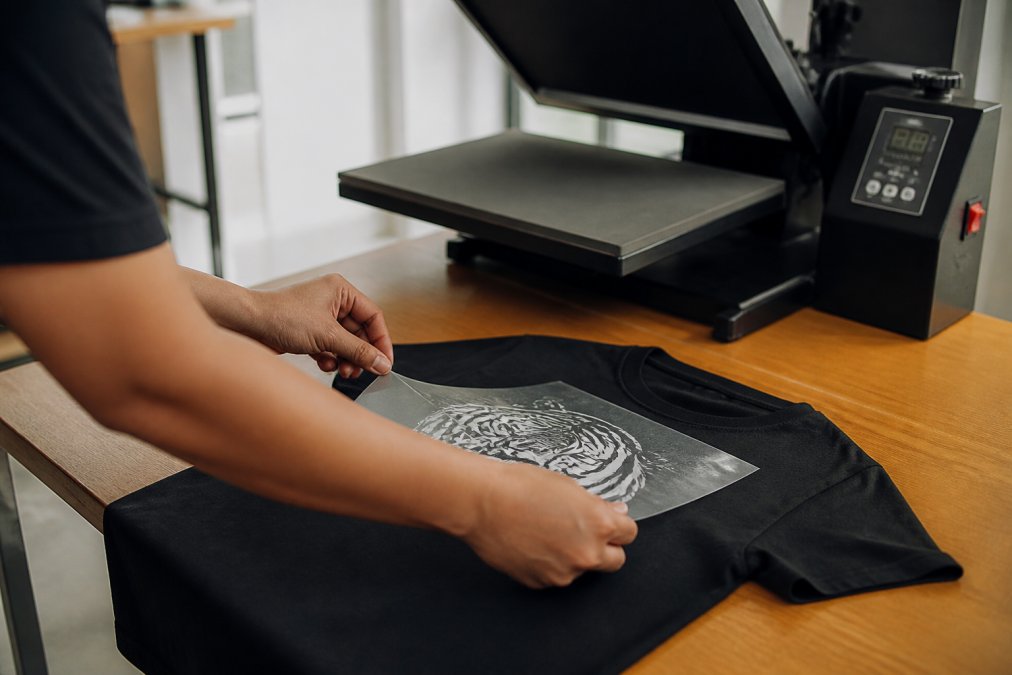
Transfers peeling after application usually indicate insufficient pressure or temperature. DTF transfers require adequate heat to activate the adhesive powder properly. Most fabrics need 160-180°C for 10-15 seconds, but this varies by fabric type and transfer thickness (peer-reviewed research). Test on scrap fabric before pressing customer orders. If peeling occurs, increase either temperature or pressure slightly on the next batch. Conversely, excessive heat can damage the transfer film itself, causing colours to fade or ink to blur.
Poor colour transfer or faded appearance suggests either inadequate curing time or incorrect heat press settings. DTF transfers need sufficient time for the adhesive to set properly. Rushing through the pressing process leaves the transfer incompletely bonded. Additionally, if the transfer was printed at low resolution or with incorrect colour profiles, the image quality suffers from the start. This is why requesting samples before large orders is essential.
Wrinkled or misaligned transfers indicate positioning problems. Transfers must sit flat against the fabric with no air pockets. Use a heat press with even pressure distribution, not a household iron. Even slight misalignment becomes obvious once pressed. Take time positioning the transfer correctly before applying heat. Some professionals use a light press first (low heat, brief duration) to tack the transfer in place, then apply full heat for the final bond.
Adhesive powder residue visible on the transfer surface suggests incomplete curing or powder application issues during printing. This is a printer problem, not an application problem. Contact your provider with photos. Reputable services like BB5wholesale handle such quality issues quickly because their reputation depends on consistent results.
Fabric preparation matters more than many realize. Garments fresh from manufacturing sometimes have finishes that inhibit adhesion. Washing new apparel before pressing DTF transfers improves adhesion significantly. Additionally, ensure the fabric surface is smooth and wrinkle-free before pressing. Wrinkles prevent full contact between the transfer and fabric, resulting in incomplete adhesion.
Choosing the right DTF transfer printing service fundamentally changes how efficiently you can run a custom apparel business. The decision comes down to matching your production volume, design complexity, and timeline requirements to a provider that excels in those areas. BB5wholesale specializes in exactly this, providing high-quality DTF and UV DTF printing with an intuitive gang sheet builder, no minimum orders, and 24/7 support to help you achieve the best value without compromising quality. Upload your gang sheet today and experience how professional DTF printing simplifies custom apparel production at any scale.
Frequently Asked Questions
Q: What makes DTF transfer printing services durable for commercial clothing lines?
A: DTF transfers achieve durability through adhesive powder bonding and heat curing, which fuses the design directly into fabric fibres. Quality DTF transfer printing services use high-resolution printing and proper curing processes to ensure prints withstand repeated washing. The key is selecting a service that uses industrial-grade equipment and follows proper heat press application protocols.
Q: How much does DTF transfer printing typically cost per unit?
A: DTF transfer pricing varies by size and order volume. Gang sheet printing offers the best value, allowing you to combine multiple designs on one sheet. BB5wholesale offers DTF transfers starting from £2.95 per transfer by size, with gang sheet building at £8.00 to optimize costs. Prices decrease with higher volumes and bulk orders. Hidden fees are rare with transparent providers, though shipping costs and setup fees should be confirmed upfront with your chosen service.
Q: How long does DTF transfer printing typically take?
A: Custom DTF transfer turnaround times generally range from 2-5 working days for standard orders, depending on volume and complexity. Rush orders may be available within 24-48 hours at a premium. Gang sheet printing can sometimes extend turnaround slightly as designs are batched together, but this saves money. Always confirm turnaround times when placing your order, especially for time-sensitive projects like events or promotional campaigns.
Q: Can DTF transfer printing handle detailed, multi-colour artwork?
A: Yes. DTF printing excels at high-resolution, full-colour designs with unlimited colour options. Unlike screen printing, there's no colour separation limitation. Professional DTF services use CMYK colour space and high-resolution printing to reproduce detailed artwork, gradients, and photographic images accurately. Vector graphics and raster images both work well. The key is preparing print-ready files in the correct format, your chosen service will provide file specifications to ensure the best results.
This article was written using GrandRanker