


Regular Heat Press for DTF: What Actually Works

Table of Contents
- Can You Use a Regular Heat Press for DTF Transfers?
- Why Standard Heat Presses May Fail with DTF
- Essential Heat Press Requirements for DTF
- DTF Heat Press Settings That Actually Work
- Why Your DTF Transfers Are Cracking
- Best Heat Press for DTF Transfers: Regular vs. Specialised
- Pressure Calibration and Heat Recovery: The Hidden Factors
- Maintenance and Long-Term Durability
Last Updated: August 30, 2026
Can You Use a Regular Heat Press for DTF Transfers?
Yes, you can use a regular heat press for DTF transfers, but success depends entirely on whether your equipment meets specific technical requirements. A standard heat press designed for vinyl or traditional heat transfer won't automatically work with direct-to-film technology. The difference isn't about the press itself, it's about whether that press can deliver the precise temperature consistency, even pressure distribution, and proper dwell time that DTF applications demand.
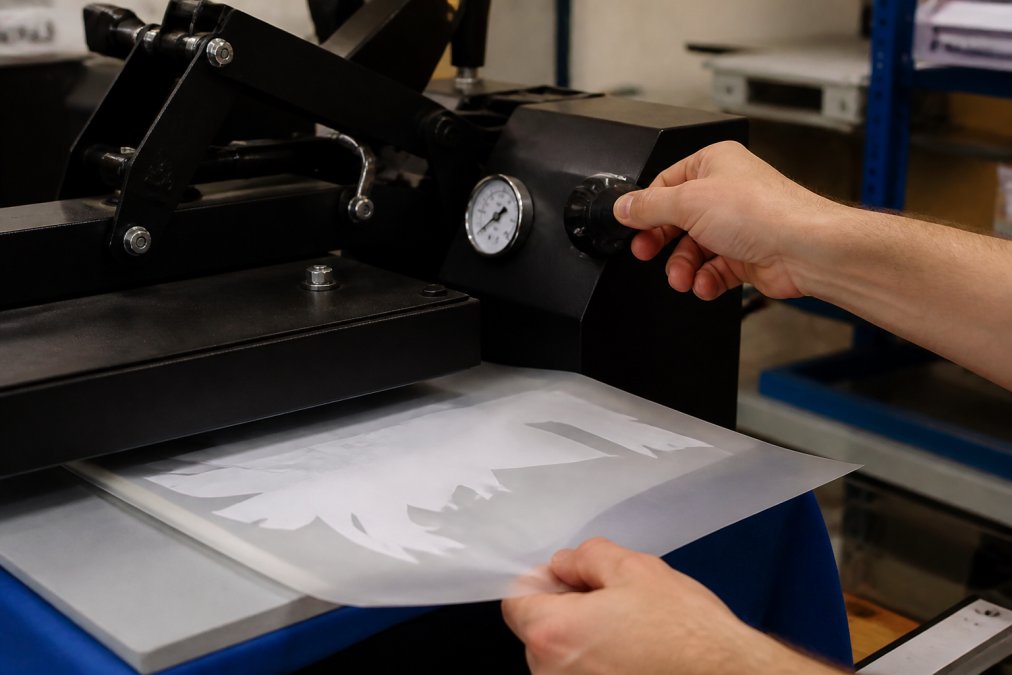
Many small business owners assume their existing heat press will handle DTF transfers without modification. This assumption costs them money. Transfers crack after a few washes, colours fade prematurely, or adhesive powder fails to cure properly. Understanding the gap between standard heat presses and DTF-capable equipment is essential before you invest in transfers or commit to this production method.
Why Standard Heat Presses May Fail with DTF
Standard heat presses designed for vinyl application or traditional heat transfer operate within different parameters than DTF requires. The adhesive powder used in DTF transfers needs precise curing conditions that many regular presses cannot deliver consistently.
Heat recovery time is critical. When you press a transfer, the platen temperature drops. A professional DTF heat press recovers to operating temperature within seconds. A standard press may take 30 seconds or longer (peer-reviewed research). Each successive transfer receives slightly lower heat, creating inconsistent results across your gang sheets.
Pressure distribution presents another failure point. DTF transfers require even pressure across the entire platen surface. Many entry-level heat presses have pressure sweet spots where some areas press harder than others. Transfer film adheres unevenly in these zones, and weakly-pressed areas peel away after a few wash cycles.
Temperature consistency matters more with DTF than with vinyl. Vinyl forgives small fluctuations because it's a mechanical bond. DTF relies on the adhesive powder melting at precisely the right temperature. Standard presses often drift 5-10 degrees Celsius during a production session, making consistent results challenging.
Platen material affects results significantly. Some standard presses use basic metal platens that develop hot spots over time. DTF transfers need a platen that distributes heat evenly across its entire surface. Ceramic or specialized heat-distribution platens are worth the investment if you're serious about DTF production.
Essential Heat Press Requirements for DTF
For a regular heat press to work reliably with DTF transfers, it must meet several non-negotiable specifications.
Temperature accuracy is the first requirement. Your press needs to maintain temperature within ±5 degrees Celsius of your set point throughout a production run. Digital temperature control with a quality thermostat is essential. Test your current press by running an infrared thermometer across the platen surface at different points. If you see variations larger than 10 degrees, your press isn't suitable for DTF without professional calibration or replacement.
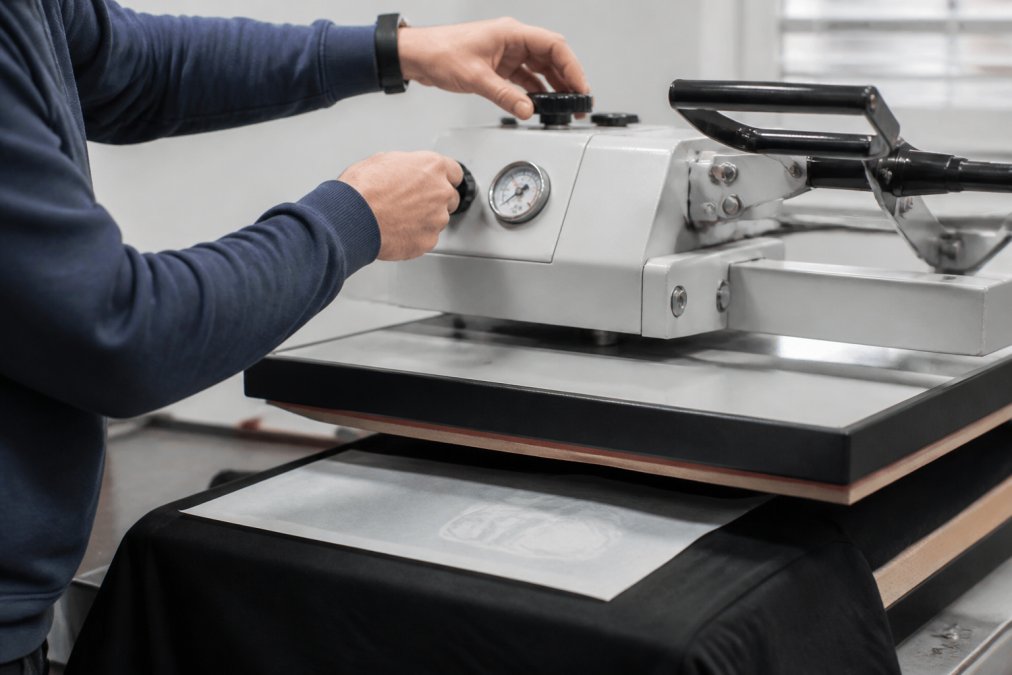
Pressure range matters more than maximum pressure. You'll typically use 2-4 PSI for DTF transfers on cotton or cotton-blend garments (peer-reviewed research). Your press needs a pressure adjustment mechanism that lets you dial in precise settings and maintain them consistently.
Dwell time capability is critical. Most DTF applications require 15-20 seconds of contact time at temperature. Your press timer needs to be accurate and repeatable.
Platen condition directly impacts transfer quality. The pressing surface must be flat and smooth. Run a straightedge across your platen. Any visible gaps or high spots mean uneven pressure distribution. If your platen shows wear or surface damage, consider professional resurfacing or replacement before committing to DTF production.
Heat recovery time should be under 30 seconds between transfers. To test this, press a transfer, remove it, and measure how long until the platen returns to operating temperature using an infrared thermometer. If recovery takes more than 45 seconds, your press will slow production significantly and may create temperature-related quality issues across large batches.
DTF Heat Press Settings That Actually Work
Getting the settings right separates professional results from wasted transfers.
Start with 150-160 degrees Celsius for most cotton and cotton-blend garments. For synthetic fabrics like polyester, reduce to 140-150 degrees. Synthetics have lower melting points than natural fibres, and excessive heat damages the fabric itself.
Pressure should sit between 2-4 PSI for standard weight fabrics. Use 2-3 PSI for lightweight or delicate materials. The goal is firm, even contact without crushing the adhesive powder.
Dwell time typically ranges from 15-20 seconds. Lighter transfers with simple designs often succeed at 15 seconds. Complex multi-colour designs benefit from the full 20 seconds. Under-pressing is the leading cause of premature peeling.
Cold peel (waiting until the transfer cools completely) generally produces stronger bonds than hot peel. If you're new to DTF, start with cold peel until you develop consistency.
Test every new batch of transfers with your specific press settings before running full production. Press one sample, let it cool completely, then perform a quick wash test. If adhesion feels weak, adjust your temperature up by 5 degrees and try again. Document the exact settings that produce reliable results for your equipment.
Why Your DTF Transfers Are Cracking
Cracks appearing after a few wash cycles point to one of three root causes: inadequate curing, excessive pressure, or incompatible fabric preparation.
Inadequate curing is the most common culprit. If your heat press isn't reaching or maintaining the correct temperature, the adhesive powder doesn't fully cure. Check your thermostat calibration using an infrared thermometer to verify actual platen temperature matches your dial setting.
Excessive pressure creates a different failure mode. Over-pressing crushes the adhesive powder into a hard, inflexible layer that cracks when the garment flexes. If you're applying more than 5 PSI, reduce pressure by 0.5 PSI and retest.
Fabric preparation matters significantly. Pre-wash new garments in warm water without fabric softener to remove manufacturing finishes and open the fabric weave, allowing better adhesive penetration.
Transfer film quality affects durability too. Standardise on one reliable source to eliminate variables you can't control in your heat press settings.
Cold peel gives the adhesive powder time to fully cure and bond to the fabric, reducing crack formation compared to hot peel.
Best Heat Press for DTF Transfers: Regular vs. Specialised
The choice between a standard heat press and a DTF-specific press depends on your production volume and quality standards.
A regular heat press works for DTF if it meets the technical requirements outlined above. The advantage is cost. The disadvantage is inconsistency. You're retrofitting equipment designed for a different purpose.
Specialised DTF heat presses are engineered specifically for adhesive powder curing. They typically feature precise temperature control within ±2 degrees Celsius, dedicated pressure ranges optimised for DTF, faster heat recovery time, and ceramic or composite platens for even heat distribution.
For small operations producing 10-15 orders monthly, a well-maintained regular heat press can work. For anyone running higher volume or targeting professional-grade durability, a DTF-specific press is the better choice.
| Press Type | Temperature Accuracy | Pressure Control | Heat Recovery | Best For |
|---|---|---|---|---|
| Standard vinyl press | ±10°C | High pressure only | 45-60 seconds | Low-volume hobby use |
| Regular heat press | ±5°C | 3-4 settings | 30-45 seconds | Small businesses with testing |
| DTF-specific press | ±2°C | Precise 1-5 PSI | Under 20 seconds | Professional production |
Pressure Calibration and Heat Recovery: The Hidden Factors
These two elements separate consistent DTF production from unpredictable results.
Pressure calibration starts with understanding what PSI actually means in your press. A gauge reading of 3 PSI sounds precise, but many standard presses have inaccurate gauges. Test your actual pressure using pressure-sensitive film. Place it under your platen, press at your target PSI setting, and examine the colour change. Even colour change across the entire platen indicates good pressure distribution. Dark spots or light areas show pressure hot spots and dead zones.
Heat recovery time directly impacts production speed and consistency. Measure heat recovery time with an infrared thermometer. Press a transfer, remove it immediately, and start timing. Note when the platen returns to within 2 degrees of your set temperature. Most professional DTF presses recover in 15-25 seconds. Standard presses often take 45-60 seconds.
Never press consecutive transfers without allowing proper heat recovery. Each under-temperature transfer increases your reject rate and wastes time on reprinting.
Maintenance and Long-Term Durability
Proper maintenance keeps your heat press performing at peak efficiency and extends its working life.
Clean your platen regularly. DTF transfers occasionally shed adhesive powder or transfer film residue. Wipe the platen with a soft, damp cloth after every 20-30 transfers. A clean platen maintains temperature consistency and prevents transferred residue from marking subsequent garments.
Check pressure calibration monthly if you're running regular production. Recalibrate using pressure-sensitive film monthly to prevent gradual quality degradation.
Inspect the heating element annually. If you notice temperature variations increasing despite thermostat adjustments, the heating element may need replacement.
Keep the thermostat clean and protected from vibration. Position your press on a stable, level surface away from machinery.
Replace silicone heating pads if your press uses them. These pads degrade over 2-3 years of regular use.
Document your settings and results. Keep a simple log of date, temperature, pressure, dwell time, fabric type, and outcome. Over months, you'll see patterns and spot when performance starts degrading.
Using a regular heat press for DTF transfers is possible, but it requires honest assessment of your equipment's capabilities. If your press maintains temperature within 5 degrees, delivers even pressure, and recovers heat quickly, you can produce reliable transfers. If it falls short in any of these areas, you'll struggle with consistency regardless of how carefully you dial in settings.
At BB5wholesale, we work with creators and businesses at every production scale. Our DTF transfer quality is engineered to work with properly-configured equipment, whether that's a well-maintained standard press or a specialised DTF machine. If you're uncertain whether your current press is suitable, test it thoroughly with a small batch before committing to larger orders. Upload your gang sheet to our platform, and our 24/7 support team can advise on press compatibility based on your specific equipment. We're here to help you achieve the best results, and that starts with honest conversations about what your equipment can actually deliver.
Frequently Asked Questions
Do you need a special heat press for DTF?
A standard heat press can apply DTF transfers, but specialised DTF heat presses offer superior results. Regular presses often lack the pressure distribution, even heating, and heat recovery time that DTF demands. If you're printing high volumes or need consistent garment durability, a DTF-specific press is worth the investment. Entry-level equipment can work for small batches, but industrial-grade presses handle temperature consistency and curing much better.
What temperature and pressure are required for DTF transfers?
Most DTF transfers require 160-180°C for 10-15 seconds, with pressure between 3.5-4.5 PSI (24-31 kPa). However, settings vary by transfer film type and substrate. Cotton blends and synthetic fabrics respond differently; always test on scrap material first. Pressure distribution matters as much as PSI, uneven pressure causes adhesive powder curing failures. Check your transfer supplier's specifications; BB5wholesale transfers come with detailed application guides.
Why are my DTF transfers cracking after pressing?
Cracking usually stems from insufficient dwell time, uneven pressure, or premature peel temperature. If you peel while the transfer is too hot, the adhesive powder hasn't fully cured, causing the film to separate from the garment. Cold peel (waiting 30 seconds after removal) prevents this. Low-end presses struggle with heat recovery time, the platen cools between presses, reducing transfer quality. Pressure calibration errors also cause adhesive powder to distribute unevenly, weakening durability.
Can a regular heat press handle DTF production at scale?
Regular presses can manage small batches (under 50 pieces weekly), but scaling up exposes their limitations. Heat recovery time lengthens production cycles, and inconsistent pressure leads to failed transfers and waste. Industrial-grade DTF presses maintain even heating and faster recovery, reducing rejects and labour time. For Etsy sellers and small shops, a dedicated DTF press pays for itself within months through reduced scrap and faster turnaround.
This article was written using GrandRanker